
Yoga to Support Perimenopause and Menopause
Apr 15, 2026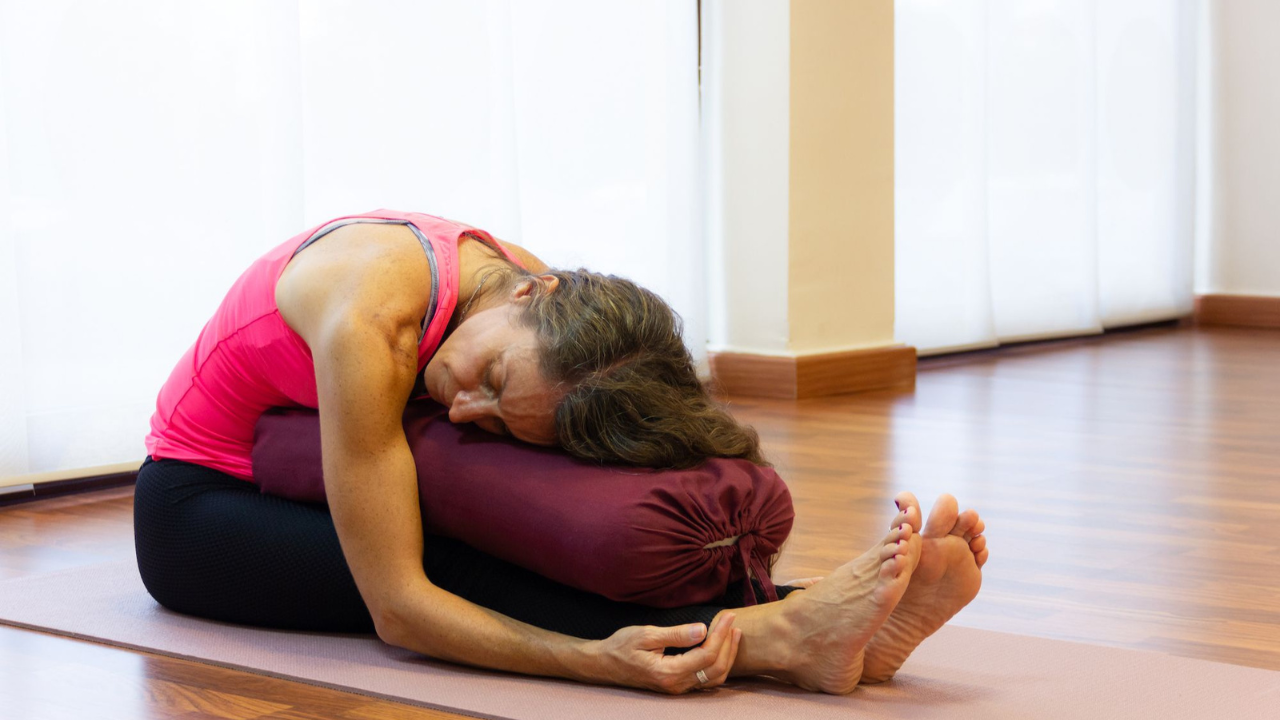
Perimenopause and menopause are often framed as a biological decline. A slow unraveling of hormones, energy, sleep, and identity.
But both modern science and ancient yoga philosophy suggest a different perspective. That this is not just an ending. It is an important recalibration. A transition not only in the body, but in the nervous system, the mind, and the sense of self.
Yoga offers a framework to navigate this transition.
Understanding the Transition: A Scientific Lens
Perimenopause is marked by fluctuating levels of estrogen and progesterone, which influence far more than the reproductive system.
These hormonal shifts affect:
- The nervous system (increased anxiety, irritability)
- Thermoregulation (hot flushes, night sweats)
- Sleep cycles (insomnia, disrupted rest)
- Mood and cognition (brain fog, emotional ups and downs)
Many women experience heightened anxiety during this phase - not because something is “wrong,” but because the nervous system can become more sensitive to stress.
The Yogic Perspective: A Shift in Identity
Yoga philosophy does not see life as linear - it sees it as cyclical.
In this framework, menopause can be understood as a transition from outward expansion (doing, achieving, nurturing others) to inward awareness (being, reflecting, redefining self). It is a movement from external validation to internal authority, from physical identity to energetic and mental awareness, and from effort to deeper insight.
Rather than resisting change, yoga invites us to observe it.
How Pranayama Regulates a Sensitive Nervous System
With increased nervous system sensitivity during perimenopause, breath becomes one of the most effective tools.
Scientific research shows that slow, controlled breathing activates the parasympathetic nervous system (commonly referred to as rest and digest), can help reduce stress levels (including cortisol) and improves emotional regulation.
Practices such as slowing the breath, lengthening the exhale, diaphragmatic breathing, alternate nostril breathing (nadi shodhana) and at times, cooling breaths (Sheetali) can help manage symptoms like anxiety, reactivity and hot flushes.
From a yogic perspective, pranayama balances prana (life force) , strengthening things like vitality and clarity of mind. From a scientific perspective, it stabilizes mental and emotional stress.
Asana (Movement): Supporting a Changing Body
During menopause, the body benefits from movement, but not in the same way it did before. Science highlights that regular movement can support bone density, improve sleep quality, reduce stress and inflammation and enhance mood through endorphin release.
Yoga asana offers a unique advantage: it combines strength, mobility, and nervous system regulation. Some helpful practices include slow, mindful movement to reduce stimulation, strength building practices to support bone health and floor based, prop heavy practices (like Yin and Restorative) to to counter fatigue and insomnia.
Meditation: Navigating Emotional and Cognitive Shifts
Fluctuating hormones can amplify emotional responses and create a sense of instability and meditation offers a way to anchor and ground.
Research shows that meditation can reduce anxiety and depressive symptoms, improve attention and cognitive clarity and increase emotional resilience. It also changes how the brain responds to stress and has been known to reduce reactivity over time, with practice and the cultivation of awareness.
In yoga philosophy, meditation is the practice of witnessing and observing. It is the practice of making space for what is emerging. During perimenopause and menopause, this practice helps with things like observing mood swings without identifying with them, noticing thoughts without spiraling into them and allowing inevitable changes with less resistance.
Sleep, Stress, and the Nervous System Connection
One of the most disruptive aspects of perimenopause and menopause is sleep disturbance. Science links this to hormonal fluctuations, increased cortisol levels and nervous system dysregulation.
Yoga-based practices like gentle movement, breathing practices and guided relaxation have been shown to improve sleep quality and reduce symptoms of insomnia and restlessness.
Integration: Why Yoga Works in This Phase of Life
Yoga is uniquely effective during perimenopause and menopause because it works across multiple systems simultaneously:
- Endocrine system → indirectly supported through stress reduction
- Nervous system → regulated through breath and awareness
- Musculoskeletal system → strengthened and stabilized through movement
- Mental-emotional state → reframed through meditation and philosophy
This multidimensional approach is exactly what this life stage requires.
The Deeper Philosophy: Letting Go of Who You Were
Perhaps the most profound aspect of menopause is not physical. Perhaps it is existential.
Who am I, if I am no longer who I was?
Yoga philosophy offers an answer: You were never just the roles, the body, or the identity you held.
Through practices of awareness, yoga gently reveals a more stable sense of self - one that is not dependent on youth, productivity, or external validation. In this way, perimenopause and menopause becomes not a loss of identity, but a return to something more essential.
While research supports yoga as a helpful tool for managing peri and menopausal symptoms - reducing stress, improving sleep, and enhancing well-being - it is not a replacement for medical care when needed. Instead, it works best as a complementary practice, a daily regulation tool and a pathway to self-understanding
Perimenopause and menopause are not problems to fix - they are transitions to navigate. Science helps us understand the body and yoga helps us understand the experience of living in that body. Together, they offer something rare - a way to move through change with awareness, steadiness, and meaning. Not by resisting what is happening, but by learning how to be with it.
References & Recommended Reading
This Changes Everything - Nikki Bezzant
The Wisdom of Menopause — Dr. Christiane Northrup
Second Spring: The Self-Care Guide to Menopause — Kate Codrington
The Body Keeps the Score — Bessel van der Kolk
Full Catastrophe Living — Jon Kabat-Zinn
The Heart of Yoga — T.K.V. Desikachar
